# Phenomenology
> **Phenomenology** is a philosophical study and movement largely associated with the early 20th century that seeks to [objectively](https://en.wikipedia.org/wiki/Subjectivity_and_objectivity_\(philosophy\) "Subjectivity and objectivity (philosophy)") investigate the nature of subjective, [conscious](https://en.wikipedia.org/wiki/Conscious "Conscious") experience and world-disclosure.[1](https://en.wikipedia.org/wiki/Phenomenology_\(philosophy\)#cite_note-1) It attempts to describe the universal features of consciousness while avoiding assumptions about the external world, aiming to describe [phenomena](https://en.wikipedia.org/wiki/Phenomena "Phenomena") as they appear, and to explore the meaning and significance of [lived experience](https://en.wikipedia.org/wiki/Lived_experience "Lived experience").[2](https://en.wikipedia.org/wiki/Phenomenology_\(philosophy\)#cite_note-FOOTNOTESokolowski1999-2)
>
> [](https://en.wikipedia.org/wiki/File:Edmund_Husserl_1910s.jpg)
>
> [Edmund Husserl](https://en.wikipedia.org/wiki/Edmund_Husserl "Edmund Husserl")
>
> [](https://en.wikipedia.org/wiki/File:Heidegger_2_\(1960\).jpg)
>
> [Martin Heidegger](https://en.wikipedia.org/wiki/Martin_Heidegger "Martin Heidegger")
>
> [](https://en.wikipedia.org/wiki/File:Sartre_1967_crop.jpg)
>
> [Jean-Paul Sartre](https://en.wikipedia.org/wiki/Jean-Paul_Sartre "Jean-Paul Sartre")
>
> [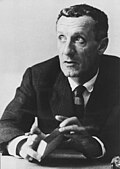](https://en.wikipedia.org/wiki/File:Maurice_Merleau-Ponty.jpg)
>
> [Maurice Merleau-Ponty](https://en.wikipedia.org/wiki/Maurice_Merleau-Ponty "Maurice Merleau-Ponty")
>
> This approach, while philosophical, has found many applications in [qualitative research](https://en.wikipedia.org/wiki/Qualitative_research "Qualitative research") across different scientific disciplines, especially in the [social sciences](https://en.wikipedia.org/wiki/Social_science "Social science"), [humanities](https://en.wikipedia.org/wiki/Humanities "Humanities"), [psychology](https://en.wikipedia.org/wiki/Phenomenology_\(psychology\) "Phenomenology (psychology)"), and [cognitive science](https://en.wikipedia.org/wiki/Cognitive_science "Cognitive science"), but also in fields as diverse as [health sciences](https://en.wikipedia.org/wiki/Health_sciences "Health sciences"),[3](https://en.wikipedia.org/wiki/Phenomenology_\(philosophy\)#cite_note-FOOTNOTEDavidsen2011-3) [architecture](https://en.wikipedia.org/wiki/Phenomenology_\(architecture\) "Phenomenology (architecture)"),[4](https://en.wikipedia.org/wiki/Phenomenology_\(philosophy\)#cite_note-FOOTNOTESeamon2018-4) and [human-computer interaction](https://en.wikipedia.org/wiki/Human-computer_interaction "Human-computer interaction"),[5](https://en.wikipedia.org/wiki/Phenomenology_\(philosophy\)#cite_note-FOOTNOTECilesiz2011-5) among many others. The application of phenomenology in these fields aims to gain a deeper understanding of subjective experience, rather than focusing on [behavior](https://en.wikipedia.org/wiki/Behaviorism "Behaviorism").
>
> Phenomenology is contrasted with [phenomenalism](https://en.wikipedia.org/wiki/Phenomenalism "Phenomenalism"), which reduces [mental states](https://en.wikipedia.org/wiki/Mental_state "Mental state")and physical objects to complexes of [sensations](https://en.wikipedia.org/wiki/Sensation_\(psychology\) "Sensation (psychology)"),[6](https://en.wikipedia.org/wiki/Phenomenology_\(philosophy\)#cite_note-FOOTNOTEFisette2011-6) and with [psychologism](https://en.wikipedia.org/wiki/Psychologism "Psychologism"), which treats [logical truths](https://en.wikipedia.org/wiki/Logical_truth "Logical truth") or [epistemological](https://en.wikipedia.org/wiki/Epistemological "Epistemological") principles as the products of human psychology.[7](https://en.wikipedia.org/wiki/Phenomenology_\(philosophy\)#cite_note-FOOTNOTEDavidson1988-7) In particular, [transcendental phenomenology](https://en.wikipedia.org/wiki/Transcendental_phenomenology "Transcendental phenomenology"), as outlined by [Edmund Husserl](https://en.wikipedia.org/wiki/Edmund_Husserl "Edmund Husserl"), aims to arrive at an objective understanding of the world via the discovery of universal logical structures in human subjective experience.[2](https://en.wikipedia.org/wiki/Phenomenology_\(philosophy\)#cite_note-FOOTNOTESokolowski1999-2)
>
> There are important differences in the ways that different branches of phenomenology approach [subjectivity](https://en.wikipedia.org/wiki/Subjectivity "Subjectivity"). For example, according to [Martin Heidegger](https://en.wikipedia.org/wiki/Martin_Heidegger "Martin Heidegger"), truths are contextually situated and dependent on the [historical](https://en.wikipedia.org/wiki/Historical "Historical"), [cultural](https://en.wikipedia.org/wiki/Cultural "Cultural"), and [social context](https://en.wikipedia.org/wiki/Social_context "Social context") in which they emerge. Other types include [hermeneutic](https://en.wikipedia.org/wiki/Hermeneutic "Hermeneutic"), [genetic](https://en.wikipedia.org/wiki/Genetic_phenomenology "Genetic phenomenology"), and [embodied](https://en.wikipedia.org/wiki/Embodied_cognition "Embodied cognition")phenomenology. All these different branches of phenomenology may be seen as representing different philosophies despite sharing the common foundational approach of phenomenological inquiry; that is, investigating things just as they appear, independent of any particular theoretical framework.[8](https://en.wikipedia.org/wiki/Phenomenology_\(philosophy\)#cite_note-FOOTNOTEZahavi2018-8)
>
> [Wikipedia](https://en.wikipedia.org/wiki/Phenomenology%20(philosophy))
- [ ] ^ Fix that formatting